
Thrive: the kind of support I wish had existed
Developing and delivering Thrive - building confidence and resilience to return to work after cancer treatment, has been one of the most meaningful pieces of work I have done in a long time. Partly because the pilot showed such encouraging early impact, but also because it was shaped by something very personal. My own experience of cancer was 13 years ago, and even then it was clear to me that there was very little meaningful support for the return-to-work stage.
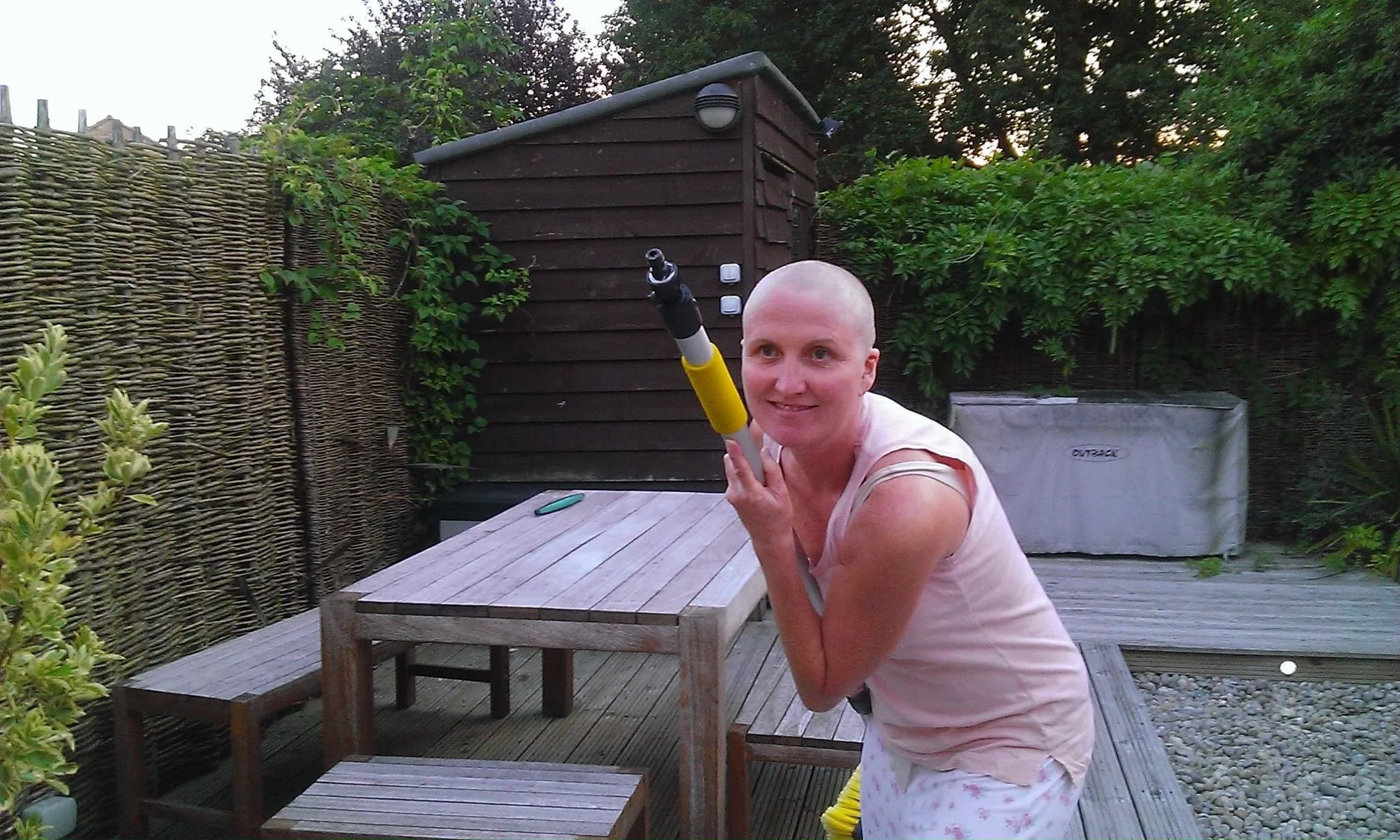
Yes I’m a big fan of Sigourney Weaver, the “get away from her you bitch” line from Aliens seemed to resonate at the time
That gap stayed with me. I know from personal experience that returning to work is not simply about phased hours, practical adjustments or being declared fit enough to go back. It can stir up anxiety, knock confidence, change your sense of identity and leave you trying to work out what is realistic now. That is a big part of why I wanted to create something more personal, practical and relevant for others facing that stage.
For employers, supporting someone back to work after cancer or a long-term health condition can easily become a conversation about phased hours, adjustments, occupational health and what is written down in a return-to-work plan.
All of that matters.
But it is not the whole story.
Because returning to work after a significant health experience is rarely just a practical process. It is often an emotional and psychological transition too. Confidence may have taken a knock. Energy can be unpredictable. Identity may have shifted. Someone who looks “fine” on paper may be carrying anxiety, uncertainty and a very different relationship with work than they had before.
I know how easy it is for support to miss the point. At one stage, when I clearly needed counselling, I contacted an EAP and was advised to book myself a nice spa day.
Now, I have nothing against a fluffy robe and a cucumber water moment.
But it was not quite the answer to what was, at the time, a fairly significant existential wobble.
That experience stayed with me. Not because spas are bad, but because it showed just how far generic support can miss the mark when someone is trying to navigate something life-changing.
That is one of the reasons I developed Thrive.
Thrive was developed by me, in collaboration with South East and Central Essex Mind and Helen Rollason Cancer Charity, to offer something more personal, practical and relevant for people preparing to return to work after cancer. The pilot was designed in response to a clear gap in support: while diagnosis, treatment and clinical recovery are understandably prioritised, the period that follows can be much less well supported. For many people, returning to work is not a straightforward marker of recovery. It can bring fatigue, anxiety, reduced confidence, uncertainty, changes in identity and concerns about how to manage workplace expectations in a realistic and sustainable way.
Too often, people are expected to “get back to normal” at precisely the point when life no longer feels normal at all. That is what Thrive was designed to address: not just the practicalities of work, but the lived reality of what it means to re-engage with it after a life-changing health experience.
The March 2026 pilot was delivered in person at Helen Rollason Cancer Charity in a small-group format over six 90-minute sessions, with two reflection weeks built in. It combined practical tools, guided reflection, discussion and peer support. The focus was not simply on returning to a job, but on helping participants think more broadly about their relationship with work, confidence, wellbeing, personal boundaries and sustainable next steps. Demand for the programme was immediate, with places filled within hours of advertising, which in itself suggested a strong unmet need for support of this kind.
The early findings were very encouraging.
All participants said they would recommend Thrive to someone in a similar situation. All felt the session length was about right. Most reported feeling more confident or much more confident by the end of the programme. The average rating for how well Thrive met its objective was 9.2 out of 10, and facilitation was rated 9.5 out of 10. Participants also reported positive scores around confidence in using the tools, overall wellbeing, programme structure and feeling safe and supported in the group.
But, as ever, the numbers only tell part of the story.
What stood out most was the shift in how participants felt about themselves and their future. The strongest theme to emerge was renewed confidence. Participants described arriving anxious, despondent or unsure about how they would cope with work, and leaving with more belief in themselves and a clearer sense of how to approach what came next. They also described a shift in perspective: thinking differently about what had happened, what they needed now and how they might move forward. The combination of practical tools, structured reflection, humour and open conversation appeared to help people process their experience in a new way.
The group format mattered too, and perhaps more than employers sometimes realise.
Participants repeatedly described the group as supportive, inspiring and reassuring. Being with others who understood the emotional reality of returning to work after a life-changing health experience reduced isolation and helped normalise difficult feelings. The two reflection weeks were valued as a way to consolidate learning, and the WhatsApp group helped participants stay connected, cheer one another on and provide a sense of gentle accountability.
As I write this I can hear it pinging in the background as once of the group is returning to work today.
There was evidence of practical change as well. One participant reported using the programme to negotiate a phased return to work on terms that worked for them. Others described feeling more able to assess situations, manage their own thinking and consider whether a less demanding role or a different future at work might be right for them. That feels important.
Good support is not about pushing people back into work at any cost. It is about helping them move forward in a way that is realistic, sustainable and aligned with who they are now.
The written feedback reinforces this. Participants spoke about increased confidence and readiness to face work again, reduced fear about returning to the workplace, greater perspective on identity, priorities and boundaries, useful tools for managing thoughts, triggers and workplace scenarios, and the value of peer support in a safe and encouraging environment. One participant said the course helped them overcome their fear of returning to the workplace and negotiate a return to work that worked for them. Another said it gave them their confidence and drive back to face the working world again after a life-changing health journey.
A key strength of Thrive was that it was proactive and practical, rather than just a discussion group. The programme was grounded in a positive psychology framework and brought together a range of practical, evidence-informed tools to support participants to rebuild confidence, strengthen wellbeing, make sense of change and think more clearly about work and the future. These included work on stress responses, unhelpful thinking patterns, PERMAH, circles of control and influence, relationships, communication, confidence building, transitions and identity, and thinking about a best possible work self.
The intention was not just to help people understand concepts, but to give them ways of applying them in real life.
For employers, this is where the conversation gets particularly interesting.
Traditional return-to-work processes often focus mainly on logistics and adjustments. Thrive highlights something else: the personal side of transition. Confidence. Self-belief. Readiness. Sense-making. Boundaries. Sustainable re-engagement. Evidence suggests that attending to these things can lead to smoother returns, earlier identification of support needs, better engagement and more sustainable reintegration into the workplace. It may also reduce the risk of relapse, prolonged adjustment difficulties or avoidable turnover. For employers, this is not just about being nice, although kindness does help. It is about supporting retention, performance, inclusion and a healthier workplace culture.
In other words, a scented candle and a head massage are not, on their own, a workforce strategy.
The outcomes also point to a wider relevance beyond cancer. Confidence, uncertainty, identity, anxiety, fatigue, boundaries and the challenge of re-engaging with work after a significant health event are not unique to cancer. They are common features of many experiences of long-term absence, including other forms of ill health and parental leave. That raises a much bigger question for employers and commissioners: what would it look like to offer similarly structured, person-centred support for other groups returning after a long period away from work?
What has also been especially encouraging is what has happened since the pilot finished. I am now speaking with two other cancer charities and a large employer about the wider relevance of this kind of support. I have also been invited to join Sadie Nine’s programme on Sunday 19 April to talk about the work, which feels both exciting and, if I am honest, just a little nerve-racking. I am hoping not to have an on-air wobble, but I am genuinely delighted that this pilot is helping to open up a much bigger conversation. Most importantly, we will also be launching an autumn Thrive programme so that more people can access this support.
The conclusion is that the Thrive pilot shows strong early promise. Participants reported increased confidence, practical learning, emotional reassurance and a greater sense that returning to work can be approached differently and on their own terms. The findings suggest that Thrive is more than a wellbeing offer. It is a structured, compassionate and practical intervention that helps people rebuild confidence, reframe their relationship with work and take meaningful next steps following a life-changing health experience.
For me, that is the real point.
Returning to work is not simply an administrative milestone. It is a personal transition.
And if we want those transitions to be healthier and more sustainable, we need to support the person, not just the process.
If any of this resonates with you or if you are an employer that would like to find out more do get in touch Jo@letsgetonwithit.co.uk
