
Don’t Trust a Fart After 10 Miles
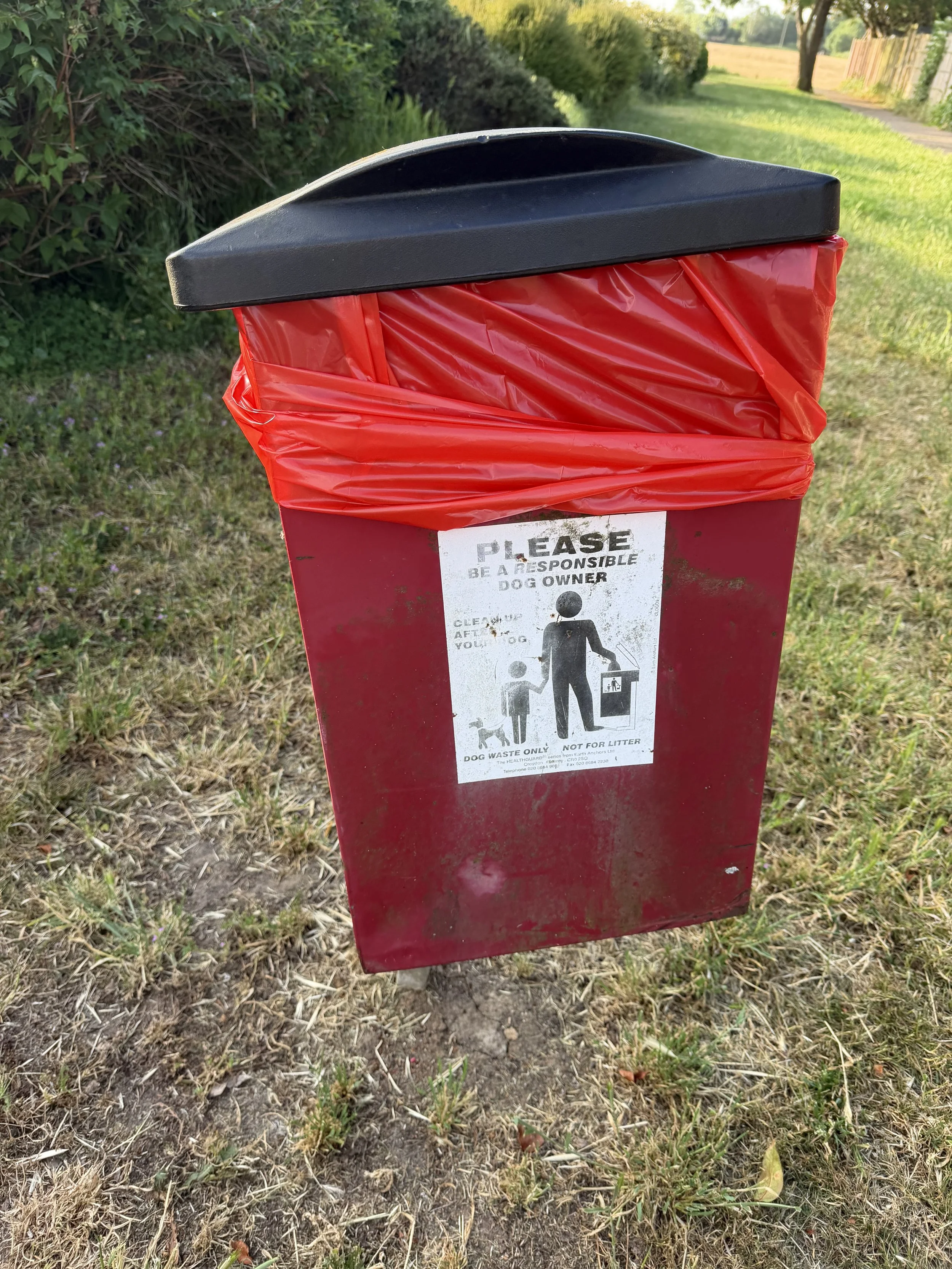
There are many things I learned while training for and running a marathon at 61.
Some of them were profound.
Some of them were psychological.
Some of them were about resilience, ageing, fear, self-belief and the stories we tell ourselves about what we are capable of.
And some of them were about the very real and practical importance of carrying a poo bag on long training runs.
Because let me tell you, after 10 miles, you should not trust a fart.
There. I have said it.
I had never planned to run a marathon. In fact, I had spent years saying I had absolutely no desire to run one. Which sounds very wise and self-aware, doesn’t it?
Except I now wonder whether what I really meant was:
“I don’t want to run a marathon because I don’t think I can.”
And that is different.
One is a preference.
The other is a limiting belief wearing Lycra.
The problem with turning 60
When I turned 60, something shifted in my head.
Not suddenly. Not dramatically. But quietly.
I started to notice the assumptions that were creeping in. About age. About what was sensible. About what was possible. About what other people might think I was capable of.
I had already been offered a seat on the tube once.
Once.
That was quite enough, thank you very much.
I know it was probably kind. I know the person probably meant well. But somewhere inside me there was a little voice that said, “Oh no. Is this what people see now?”
And that voice started having conversations with other voices.
“You are getting older.”
“Don’t be ridiculous.”
“Marathons are for other people.”
“You might get injured.”
“You might not finish.”
“You might make a fool of yourself.”
“You might die.”
Our brains are designed to keep us safe. That is their job. But sometimes our risk-averse brains become a little overenthusiastic. They confuse discomfort with danger. They mistake uncertainty for threat. They tell us that the safest option is to stay exactly where we are.
Sometimes, they are wise.
Sometimes, they are just being dramatic little goblins.
Booking Edinburgh
I booked the Edinburgh Marathon even though I had never been to Edinburgh.
I remember thinking, “Well, if I get injured or can’t do it, I can still enjoy the city.”
That sounds reasonable, doesn’t it?
Except look what my brain did there.
Before I had even started training, it had already built in the escape route. Not, “I am going to Edinburgh to run a marathon.” More, “I am going to Edinburgh and, if I fail, at least there will be nice buildings.”
Helpful? Maybe.
Protective? Definitely.
Confident? Not so much.
This is how our brains work. They try to soften the possible disappointment before we have even begun. They build the emotional airbag early. They say, “Don’t get too attached to this. Don’t hope too much. Don’t fully commit. Then it won’t hurt if it doesn’t happen.”
But the problem with that is that it also stops us finding out what might happen if we did commit.
The glamorous reality of training
Training for a marathon is not one inspirational montage.
It is not all sunrise runs, strong legs and inspirational music.
It is chafing.
It is tiredness.
It is wondering whether your knee is about to fall off or whether you are just being a bit dramatic.
It is planning your route around toilets.
It is carrying a poo bag just in case.
And yes, I did sometimes wonder whether people noticed me depositing a neatly tied bag into a dog waste bin with no dog in sight.
Morning.
Just styled it out.
Runner’s poo is a thing. So is runner’s wee. And nobody seems to put that on the motivational posters.
On race days, my bladder appears to behave like a faulty tap. It doesn’t happen in training, so I don’t think it is stress incontinence. It is more like my body decides, “Oh, we’re doing an event? Excellent. Let’s eject all fluid immediately.”
At water stations, it felt like I drank and it went straight through me.
I have, over time, perfected the art of letting some out while still running.
This is not in any official training plan.
Thankfully, Edinburgh was hot and spectators had hosepipes trained on us. I can only say I was deeply grateful for their community spirit and excellent timing.
The mental battle
The physical training was one thing.
The mental training was something else entirely.
On long runs, the voices started.
“Why are you doing this?”
“What are you trying to prove?”
“You’ve always run, but not this far.”
“You said you would never run a marathon.”
“This is ridiculous.”
And maybe that was the point.
I had said I never wanted to run a marathon. But perhaps underneath that was a quieter sentence:
“I don’t want to want it, because then I might have to find out I can’t do it.”
That is one of the sneakiest ways we protect ourselves.
We pretend we don’t want something.
We dismiss it before it can disappoint us.
We call it “not my thing” when actually it might be “too frightening to try.”
Not always, of course. Some things genuinely are not our thing. I have no plans to take up pole vaulting or become a contestant on Naked Attraction.
But sometimes the thing we say we do not want is sitting very close to the thing we are scared we cannot do.
The fear got louder
As the marathon got closer, the fear became less amusing.
It stopped being “What if I don’t finish?” and became “What if something terrible happens?”
What if I pass out?
What if my heart can’t cope?
What if I actually die on the course?
People do die during marathons. Not many, but they do. A systematic review found reported sudden cardiac death rates in marathons ranging from around 0.6 to 1.9 per 100,000 runners, depending on the study. Another large study of more than three million marathon runners found the risk of sudden cardiac death was about 0.8 per 100,000 participants. So yes, it happens, but it is rare. My brain, however, was not interested in “rare”. My brain was interested in “possible”. (PubMed)
That is what fear does.
It does not always calculate probability.
It grabs possibility and puts it on a big screen.
In the week before the marathon, I felt my body start to close down. I craved sleep. I wanted to shut the fear out. I know this about myself: when I am really, properly afraid, not just worried or a bit twitchy, my body wants to sleep.
Not avoidance in the lazy sense.
More like the system saying, “This is too much. Power down.”
And I had to notice that. Not judge it. Not catastrophise it. Just notice.
This is part of the work I use in Thrive: understanding what is happening in the brain and body so we can respond rather than simply be dragged around by it.
The inner chimp, the goblins, the protective voices, the old stories — whatever language we use — the point is the same.
When we can name what is happening, we have a better chance of not being ruled by it.
Race day
The day came.
It was hot.
People were being treated at the side of the road, looking pale and waxy, which did absolutely nothing for my anxiety.
So I stuck to the plan.
I watched my heart rate. I had decided 150 beats per minute was my “stay alive” number, so I kept an eye on that and refused to get swept up in everyone else’s pace.
Someone had given me advice that I loved:
Run the first third with your head.
Run the second third with your training.
Run the final third with your heart.
The first third worked. I stayed sensible.
The second third worked too. I trusted the training. I had done the work. In all those weeks, I only missed two runs. Two. I had trained in the rain, in the cold, when I was tired, when I didn’t fancy it, when my brain was full of excuses.
That middle section was where I could say, “You know how to do this.”
But the final third?
That was harder.
I had planned to listen to Bob Mortimer and Paul Whitehouse’s Gone Fishing audiobook when things got tough because I thought it would make me laugh.
Instead, Bob started talking about heart issues and how we don’t always know we have a problem.
“Even marathon runners have heart attacks.”
I love you, Bob, but fuck off.
That was switched off immediately.
The wall
The last five miles were grim.
Not all of the race. Just those last five miles.
But my goodness, they were enough.
People talk about “the wall” as if you get through it and then some magical new burst of energy appears.
That was not my experience.
My head decided this was the worst thing I had ever done to myself and it was going to bloody well tell me, loudly and repeatedly, all the way to the finish.
“Stop.”
“This is ridiculous.”
“You don’t have to do this.”
“Yes, you do, because you raised £3,000.”
“If you don’t finish, you’ll let everyone down.”
“Fuck everyone, I don’t care.”
“Why are people yelling my name?”
“Oh yes, because you put JO in large letters on your T-shirt.”
“Whose stupid idea was that?”
That final stretch was not elegant. It was not spiritual. It was not me gliding towards the finish line with gratitude in my heart and wisdom in my soul.
It was more like my head and my mouth were running the marathon while the rest of me shuffled behind, swearing.
And yet.
I kept going.
Nobody was at their best
At one point, a young girl came into view in pale blue shorts.
I think she may have trusted a fart after 10 miles.
But honestly, who cares?
None of us were at our best.
And there was something strangely beautiful about that.
A marathon strips away a lot of nonsense. Nobody looks polished. Nobody is pretending they have it all together. People are limping, sweating, leaking, crying, bargaining with God and looking for jelly babies.
And still moving forward.
There is something in that, isn’t there?
We spend so much of life trying to look competent and composed. We worry about what people will think if we wobble, fail, leak, cry, need help, change pace or look a mess.
But sometimes the win is not looking good.
Sometimes the win is still being there.
Still moving.
Still choosing not to stop.
The finish
I did finish.
I ran the Edinburgh Marathon at 61.
I only walked for about 30 minutes in total.
Out of around 10,000 runners, only 80 women were in the 60–64 age group, and I was middle of the pack.
I did not die.
Which was a relief.
More than relief, actually.
A week on, I still feel tired. My body is still recovering. But something else has happened too.
I feel psychologically stronger.
Physically stronger.
Quieter inside.
There is a calmness and a self-belief that I do not think I had before. Not in a loud, “look at me, I can do anything” way. More in a deep, steady, “I can do more than my fear told me I could” way.
And that feels enormous.
Why this matters beyond running
This is not really an article about running a marathon.
Not entirely.
It is about what happens when we become curious about the voices that tell us we can’t.
The inner chimp.
The protective brain.
The goblins.
The “who do you think you are?” committee.
The part of us that would rather not try than risk finding out.
We all have these voices. They show up in different places.
Returning to work after cancer.
Starting again after redundancy.
Going through menopause or perimenopause and wondering what on earth has happened to your body, brain and confidence.
Taking on a new role.
Leaving a job.
Starting a business.
Having a difficult conversation.
Putting yourself in a room where you are not sure you belong.
Trying something that feels too big, too late, too exposing or too unlikely.
That is why I run Thrive for different groups of people navigating change, confidence, identity and transition. Thrive is not about pretending everything is fine. It is about understanding what is happening in your mind and body, learning practical tools, building evidence, and finding ways to move forward without waiting to feel fearless.
The next Thrive cohort will focus on menopause and perimenopause — because that too can be a huge transition. Not just physically, but emotionally, psychologically and relationally. It can shake confidence. It can change how we see ourselves. It can make capable women question themselves in ways they did not expect.
And I am interested in that space.
The messy middle.
The point where we are not who we were, not yet sure who we are becoming, and our brains are offering us all sorts of unhelpful commentary.
So, what might be possible?
I am not suggesting everyone should run a marathon.
Honestly, I am not even sure I am suggesting I should run another one.
But I am suggesting this:
What might you do if you understood your fear a little better?
What might you try if you could quieten the voices — or at least stop believing every word they say?
What might become possible if you stopped treating your risk-averse brain as the whole truth?
Because sometimes your brain is trying to keep you safe.
And sometimes it is keeping you small.
The trick is learning the difference.
And sometimes, apparently, the trick is also carrying a poo bag.
Just in case.
If you are interested in Thrive
